Back to Projects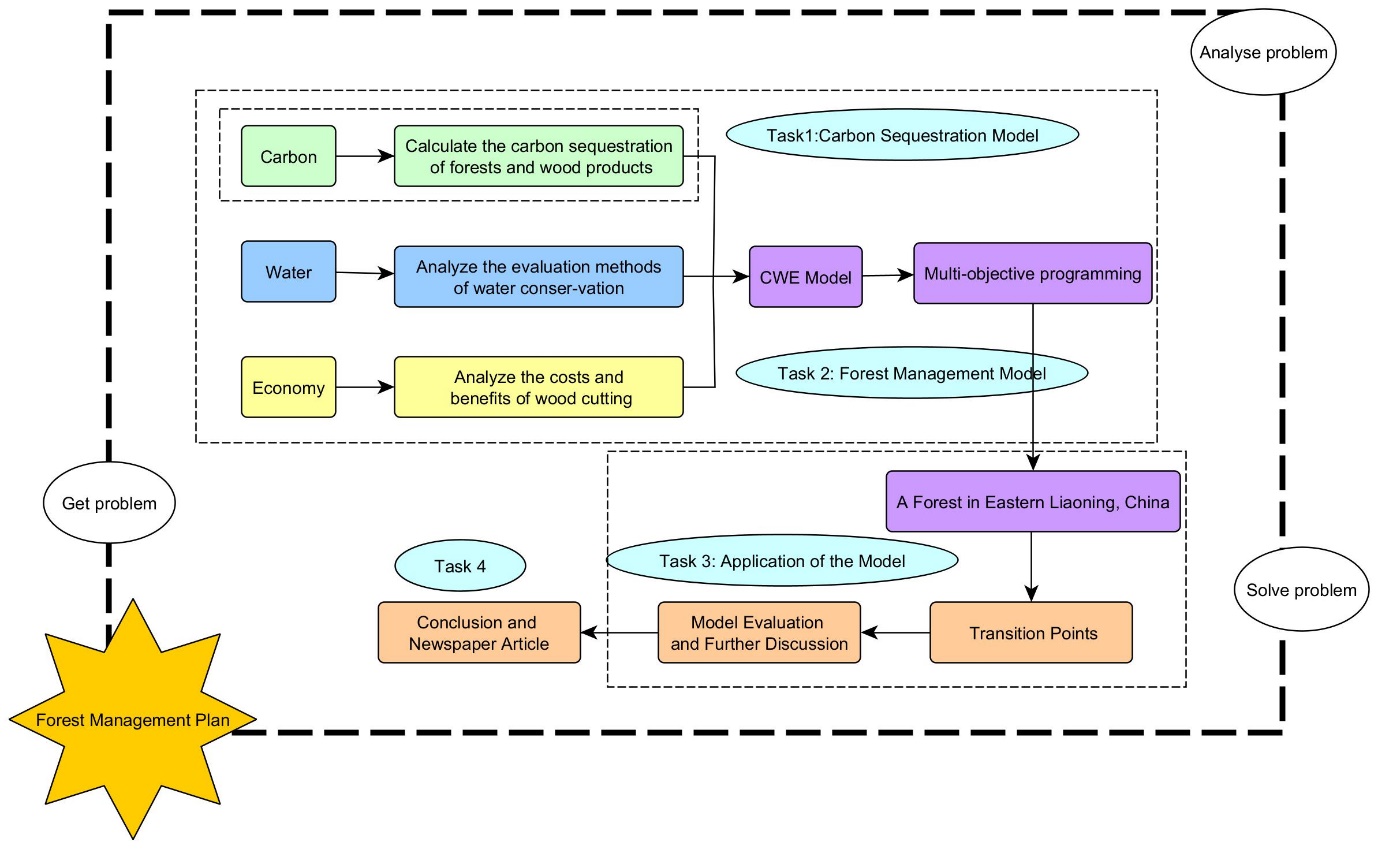
MCM Forest Management | Multi-Objective Modeling of Carbon, Economy, and Water Conservation
2022 MCM/ICM Problem E: using a CWE model to balance harvesting and ecological value
Primary Modeling Contributor | Limited Paper Writing
2022 (exact dates to be added)
To be added
Honorable Mention
2022-02-21
Richards Equation
AHP
Multi-Objective Optimization
Programming tools to be added
Mathematical Modeling
MCM/ICM
Multi-Objective Optimization
Forest Management
Case at a Glance
MCM Forest Management | Multi-Objective Modeling of Carbon, Economy, and Water Conservation
- Background / Problem
- How can forest carbon sequestration, harvesting economics, and water conservation be balanced quantitatively in an actionable management plan?
- My Role & Scope
- Primarily responsible for modeling, with a limited contribution to paper writing; exact submodel and section boundaries were not further specified.
- Key Decisions / Actions
- Modeled carbon sequestration by living trees and wood products and calculated harvesting economics
- Used AHP to evaluate five water-conservation factors, including consistency testing and normalization
- Built the CWE multi-objective model and solved for harvesting quantity and interval in an eastern Liaoning case
- Result / Validation Status
- Produced a 24-page submission for 2022 MCM/ICM Problem E; the paper reported 450 trees per hectare at 30-year intervals, and the team received an Honorable Mention.
- Key Outputs
- MCM/ICM submission paper Available
- Nontechnical community article Available
- Code and model files Pending
- MCM/ICM Honorable Mention Available
Project Overview
This project addressed Problem E of the 2022 MCM/ICM. The task was to model carbon sequestration by forests and wood products, design a forest-management plan that balances harvesting with other ecological values, apply the model to a specific forest, and explain the recommendation to the local community. The team paper combined carbon sequestration, water conservation, and economic value in a CWE model, then applied it to Larix olgensis plantations and natural secondary Quercus mongolica forests in eastern Liaoning, China. I was primarily responsible for modeling and contributed to a limited portion of the paper writing; exact submodel and section boundaries were not further specified.
Pain Points & Opportunities
Forest management is not a single-objective problem. Allowing trees to grow supports carbon sequestration, while appropriate harvesting can store carbon in wood products and create economic value; harvesting also changes vegetation structure and water-conservation capacity. These objectives use different units, time horizons, and directions, so direct comparison can be misleading. Tree species, age classes, stand density, wood carbon content, cultivation costs, terrain, and climate introduce further complexity that must be controlled through explicit assumptions when data are limited.
Goals & Metrics
The project had four goals: estimate carbon sequestration by forests and wood products over time; build a decision model balancing sequestration, harvesting economics, and water conservation; demonstrate how the model could be applied to a selected forest; and translate the conclusion into a nontechnical article for the local community. This page presents the modeling process, team results, and confirmed award supported by the available materials. It does not imply real-world deployment or unverified independent ownership.
User Research
The modeling inputs covered forest-stock growth, biomass across age classes, average organic carbon content, wood density and carbon content, and cultivation, management, and harvesting costs. The water-conservation analysis organized five factors: rainfall, soil texture, land cover, vegetation, and landform. The application focused on representative Larix olgensis plantations and natural secondary Quercus mongolica forests in eastern Liaoning. This section describes data and source investigation for modeling rather than user research; source datasets, code files, and the part of data preparation I personally owned are to be added.
Solution Design
The solution used a layered structure. The carbon model separated living trees from wood products: a Richards equation fitted forest-stock growth for living trees, and biomass, average organic carbon content, and age-class area were used to estimate sequestration potential; wood products were modeled from wood carbon content and density. The economic model combined harvesting revenue with accumulated cultivation, management, and labor costs. An AHP model weighted five water-conservation factors and checked judgment-matrix consistency. The normalized objectives were then combined into a weighted CWE decision function.
Execution Plan
The paper established assumptions, notation, and submodels before calculating the AHP judgment matrix, factor weights, and consistency ratio. Carbon sequestration, economic value, and water-conservation objectives were normalized and combined with equal weights of 0.33. For the regional application, forest area, species structure, age classes, carbon content, and wood density from eastern Liaoning were substituted into the model, with harvesting quantity and interval as the main decision variables. I primarily handled modeling and contributed to a limited portion of the paper writing; the programming language, solver, visualization tools, code modules, and exact derivations I owned were not further specified.
Results Review
For the eastern Liaoning case, the paper reported a management result of harvesting 450 trees per hectare every 30 years and used that schedule to discuss long-term sequestration by forests and wood products. The team also produced a 24-page English submission and a nontechnical community article titled “Is Logging Necessarily Bad?” explaining why appropriate harvesting can be part of forest management, and ultimately received an Honorable Mention. This was an output of the paper’s model, not evidence of real-world deployment or independent external validation; detailed reviewer feedback has not been added.
Iteration Reflection
The CWE model placed environmental, economic, and socially relevant factors in one decision framework and made tradeoffs visible, but its output depends on simplifying assumptions and experience-based parameters. The body of the paper used equal objective weights, whose justification could be strengthened. The application focused on two tree types and did not fully represent climate change, biodiversity, or other human activities. Future work could add parameter sensitivity, alternative weighting scenarios, uncertainty ranges, cross-region validation, and reproducible data-processing and optimization code. Exact submodel ownership, paper-section boundaries, and a fuller post-competition retrospective can be added when more information is available.
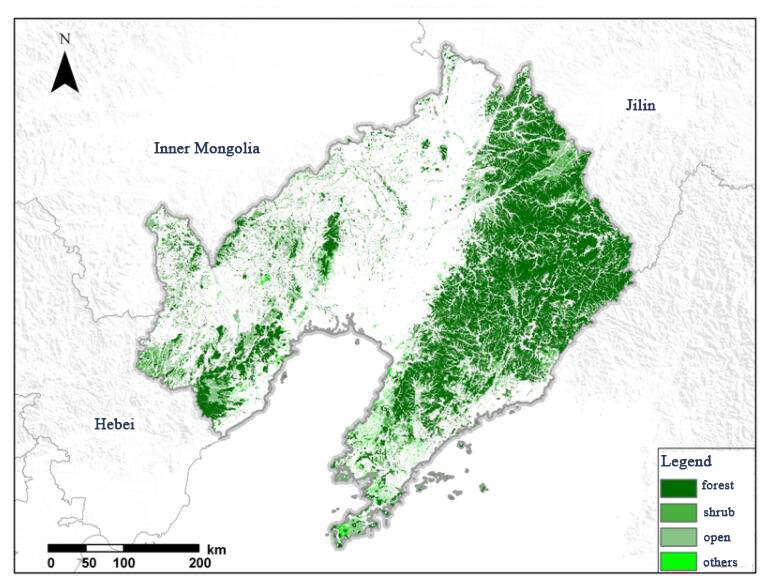 Forest-resource distribution in Liaoning Province. Source: team submission paper (2022).
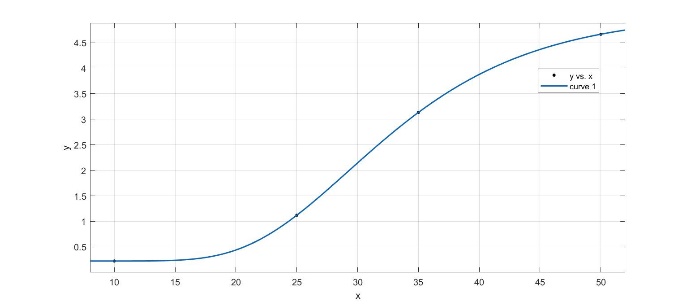 Richards volume-growth curve fitting for Larix olgensis. Source: team submission paper (2022).
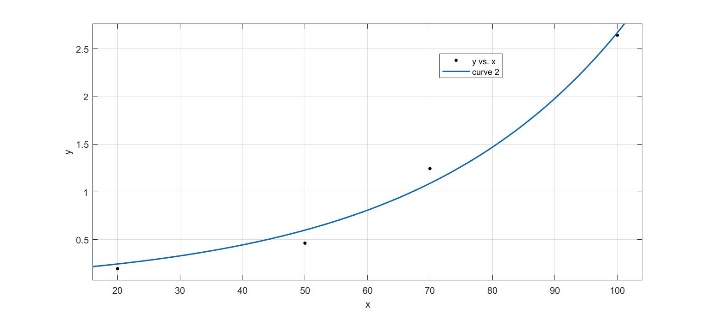 Richards volume-growth curve fitting for Quercus mongolica. Source: team submission paper (2022).