Back to Projects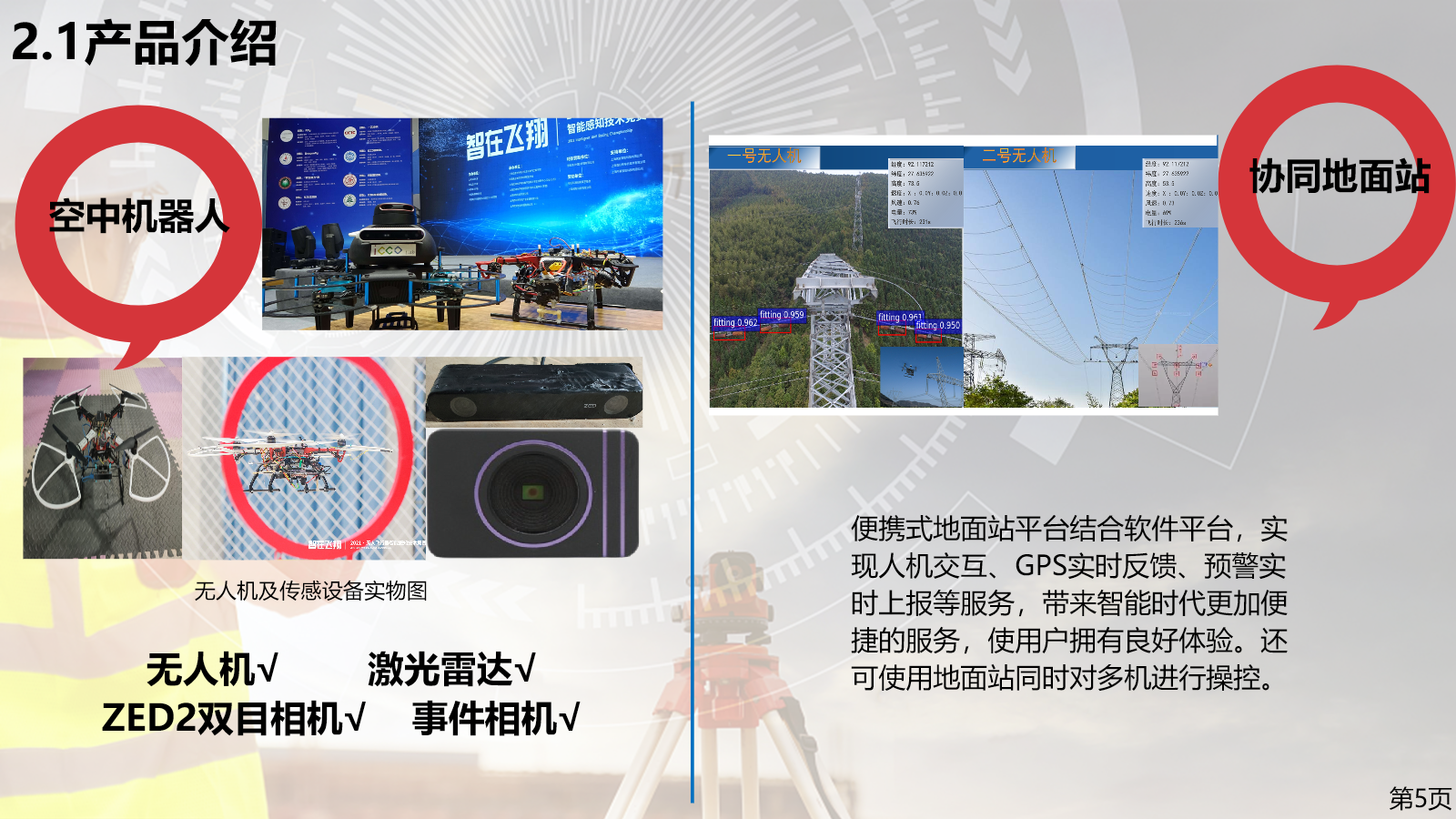
Lingfeng Smart Delivery | Air-Ground Collaborative Robot
An air-ground delivery concept for the last mile in campuses and residential communities
CAO | Competitive Analysis, Business Model, and Financial Forecasting
2021.04 – [Placeholder: end date]
15-person core team
iCAN National Second Prize | Internet+ Provincial Silver Award
2022-01-01
Air-Ground Collaboration
Computer Vision
FPGA
WeChat Mini Program
Competitive Analysis
Business Model
Financial Forecasting
Product Strategy
Case at a Glance
Lingfeng Smart Delivery | Air-Ground Collaborative Robot
- Background / Problem
- Last-mile delivery in campuses and communities is constrained by both human-delivery capacity and the terrain and vertical-reach limits of ground-only autonomous vehicles.
- My Role & Scope
- Owned competitive analysis, business-model design, and financial forecasting, translating technical differentiation into a product comparison, revenue paths, and funding assumptions.
- Key Decisions / Actions
- Compared DJI drones, Qiteng's power-inspection robot, and the proposed product across precision, range, automation, digital capabilities, and price
- Mapped upstream components, R&D-production-service capabilities, downstream applications, and product and platform revenue paths
- Built five-year revenue and profit forecasts and planned expenses, financing size, equity share, and use of funds
- Result / Validation Status Delivered
- The project won a National Second Prize in the iCAN College Student Innovation and Entrepreneurship Competition and a Provincial Silver Award in the Internet+ College Student Innovation and Entrepreneurship Competition; the team also placed seventh nationally in the 2021 Smart Flight UAV Perception Competition.
- Key Outputs
- Competitive comparison matrix Available
- Business model and industry-chain proposal Available
- Five-year financial forecast and financing plan Available
Project Overview
Lingfeng Smart Delivery was an air-ground collaborative delivery concept for semi-enclosed environments such as campuses and residential communities. The proposed service combined an autonomous ground vehicle, a drone, and a WeChat Mini Program: the ground vehicle handled longer routes on flat roads, the drone extended delivery to upper floors, windows, or corridors, and the Mini Program connected ordering, route visibility, and delivery feedback. I served as CAO in a 15-person interdisciplinary team and owned competitive analysis, business-model design, and financial forecasting, translating the technical concept into differentiation, revenue paths, and funding assumptions.
Pain Points & Opportunities
The problem was broader than delivery speed. First, peak demand and access restrictions could overwhelm human delivery and make arrival times unreliable. Second, ground-only autonomous vehicles depended on accessible roads and could not reach elevated or precise last-mile destinations. Third, delivery inside a campus or residential compound was shaped by site access, safety, and institutional approval: the product had to work for students and residents while also earning permission from a school, property manager, or logistics partner. The opportunity was therefore to connect complementary transport modes to a workable service system rather than simply add another device.
Goals & Metrics
The product and business goals were to identify viable campus and community entry scenarios; distinguish site partners, buyers, and end users; define differentiation from human delivery and ground-only vehicles; connect user orders, site partnerships, and device or service fees into a coherent business model; and surface safety, regulatory, adoption, competitive, and cost risks. Delivery efficiency, unit cost, order volume, and adoption outcomes are [Placeholder: pilot metrics and results]. The page does not present intended outcomes as validated impact.
User Research
The competitive analysis compared DJI drones, Qiteng’s power-inspection robot, and the proposed product across operating precision, range, automation, digital capabilities, and price. Mature drone solutions offered three-dimensional reconstruction and road-independent operation, while ground-inspection robots supported real-time transmission and rapid judgment. The proposed differentiation centered on autonomous perception and obstacle avoidance, air-ground collaboration, a ground-station software platform, real-time feedback, and configurable deployment. The business plan also applied Five Forces to suppliers, buyers, entrants, substitutes, and industry rivals, connecting feature comparison to cost, entry barriers, and substitution risk.
Solution Design
The business model combined product, platform, and service revenue. Upstream inputs included airframes, motors, flight control, batteries, sensors, and camera equipment; the team supplied R&D, production, and service capabilities; revenue paths included UAV products, an air-ground management platform, and customized route design. Downstream scenarios covered campus and community delivery as well as the power, bridge, and road inspection extensions shown in the pitch deck. The campus and community concept used a B2B+B2C model with device sales or leasing, platform fees, order commissions, route-design fees, and individual order payments. These were project-stage proposals, not evidence of realized revenue.
Execution Plan
My work covered three connected tracks. First, I built a competitor matrix that normalized technical descriptions into precision, range, automation, digital capability, and price, making the product’s advantages and limitations explicit. Second, I mapped industry-chain roles, core capabilities, customer scenarios, and charging mechanisms into a business model connecting R&D, production, platform services, and downstream applications. Third, I used manufacturing, operations, marketing, and staffing assumptions to prepare five-year revenue and profit forecasts and to design the financing size, equity share, and use of funds. The technical concept was developed jointly by team members from computer science, artificial intelligence, software, mechanical engineering, and business disciplines; my responsibility was to keep the technical capabilities, commercial logic, and financial assumptions aligned.
Results Review
The project won a National Second Prize in the iCAN College Student Innovation and Entrepreneurship Competition and a Provincial Silver Award in the Internet+ College Student Innovation and Entrepreneurship Competition. According to the source material, the team also placed seventh nationally in the 2021 Smart Flight UAV Perception Competition and was the only undergraduate team among the award recipients; the smart-delivery system was then in the intellectual-property application stage. The application number and current legal status, pilot sites, user and order data, delivery efficiency, and cost outcomes are [Placeholder]. Market-size, five-year revenue, profit, and financing figures in the plan were forecasts and are not presented as achieved results.
Iteration Reflection
The project taught me that a complete business plan is not the same as a validated product. The proposal covered market, competition, positioning, marketing, and financial projections, but a stronger next phase would test four questions first: whether institutional decision makers would open their sites and accept the partnership cost, whether end users would pay for delivery, whether air-ground collaboration materially outperformed simpler ground-only or human services, and whether regulation and unit economics supported continued operation. A focused campus MVP, decision-maker interviews, end-user tests, a service blueprint, and a real cost model would provide stronger evidence than broad market assumptions and long-range projections.
Information status: This case was reconstructed from the original business plan and pitch materials. Items marked as placeholders do not yet have verifiable supporting information, and technical achievements are attributed to the team.
Project Materials
Product and Collaborative Equipment
Product and collaborative ground-station concept from the original pitch deck.
Competitive Analysis
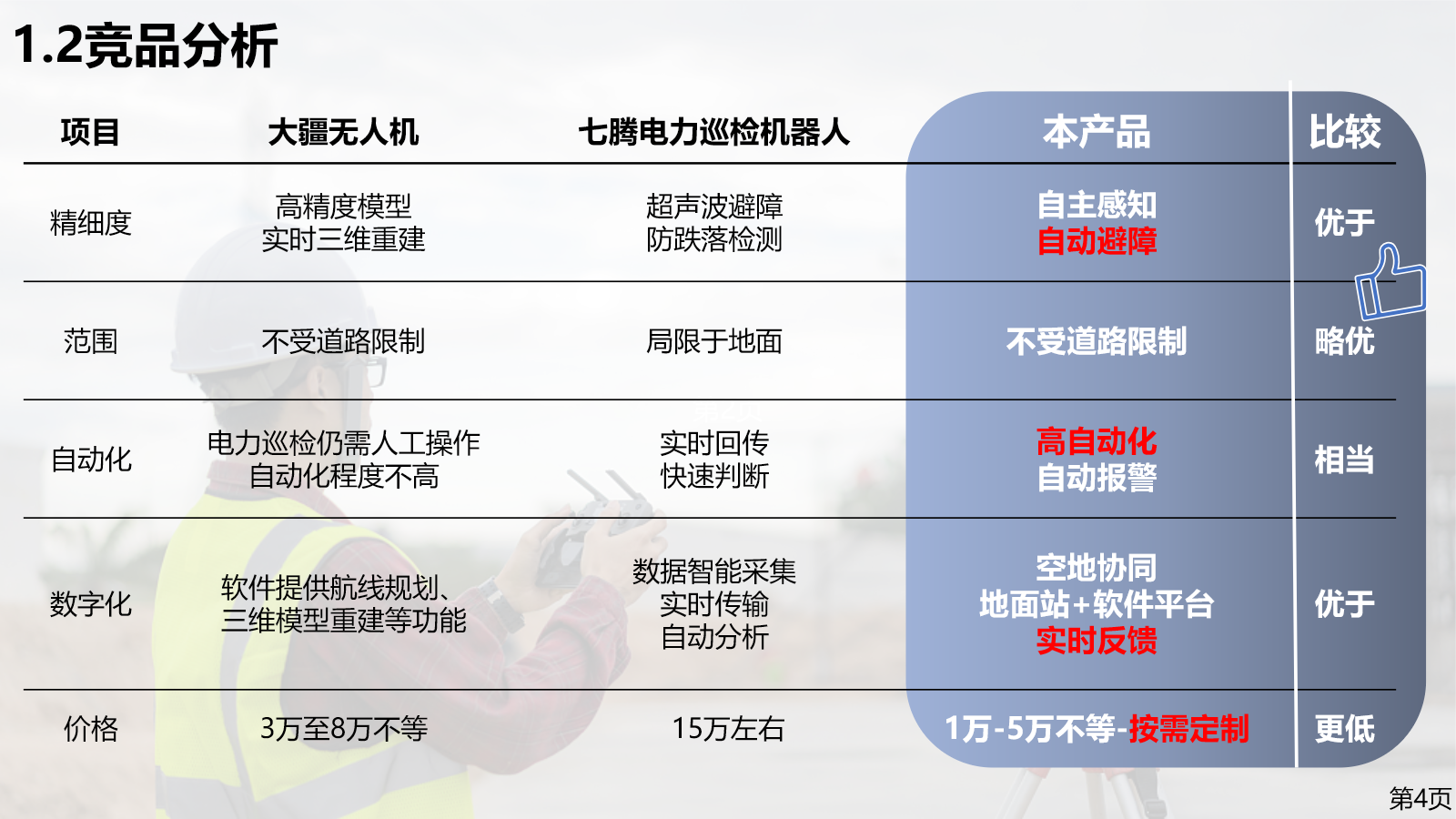
Comparison across precision, operating range, automation, digital capabilities, and price.
Business Model
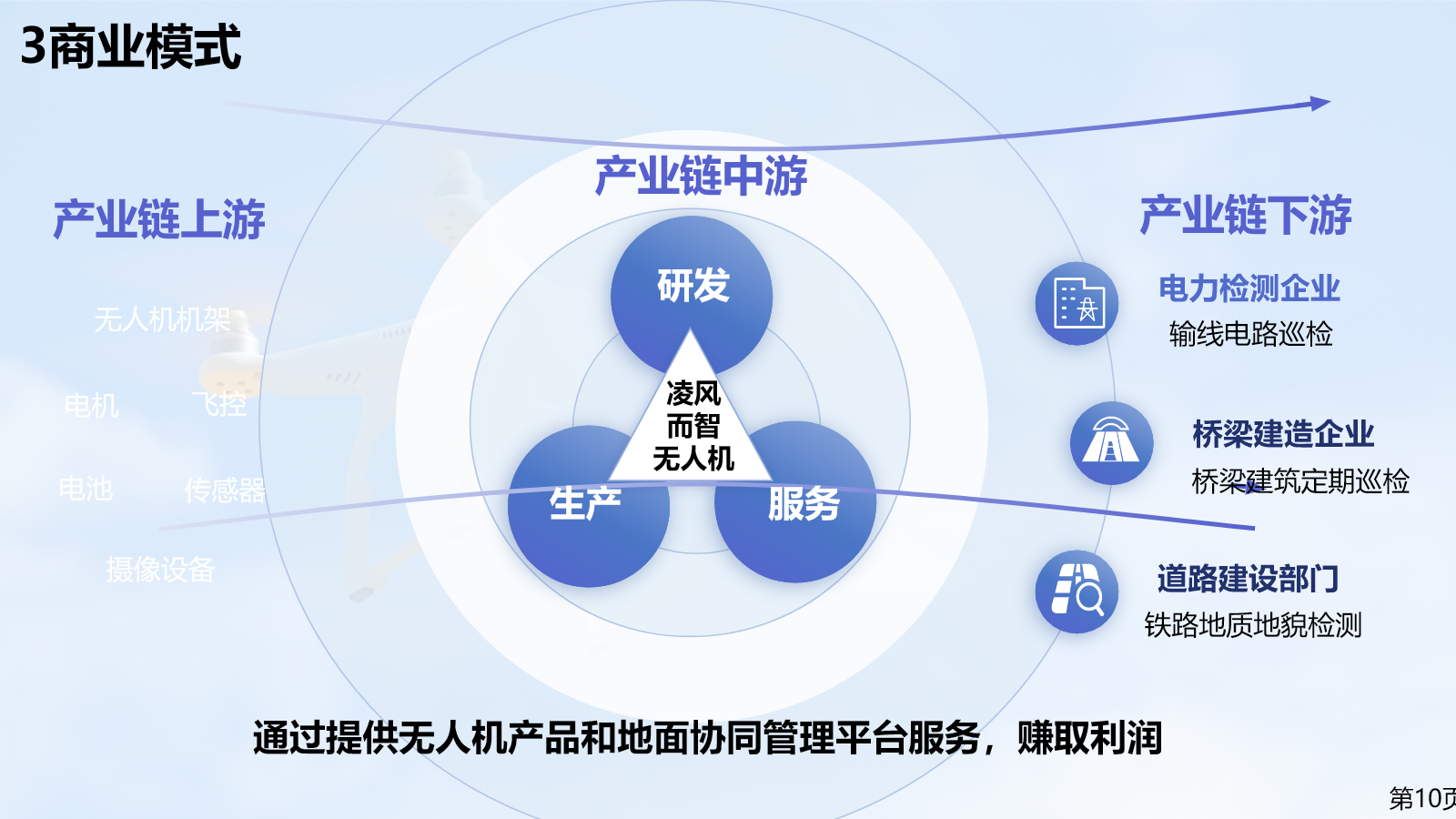
Industry-chain business-model slide covering product, platform service, and inspection-scenario extensions.
Financial Forecast
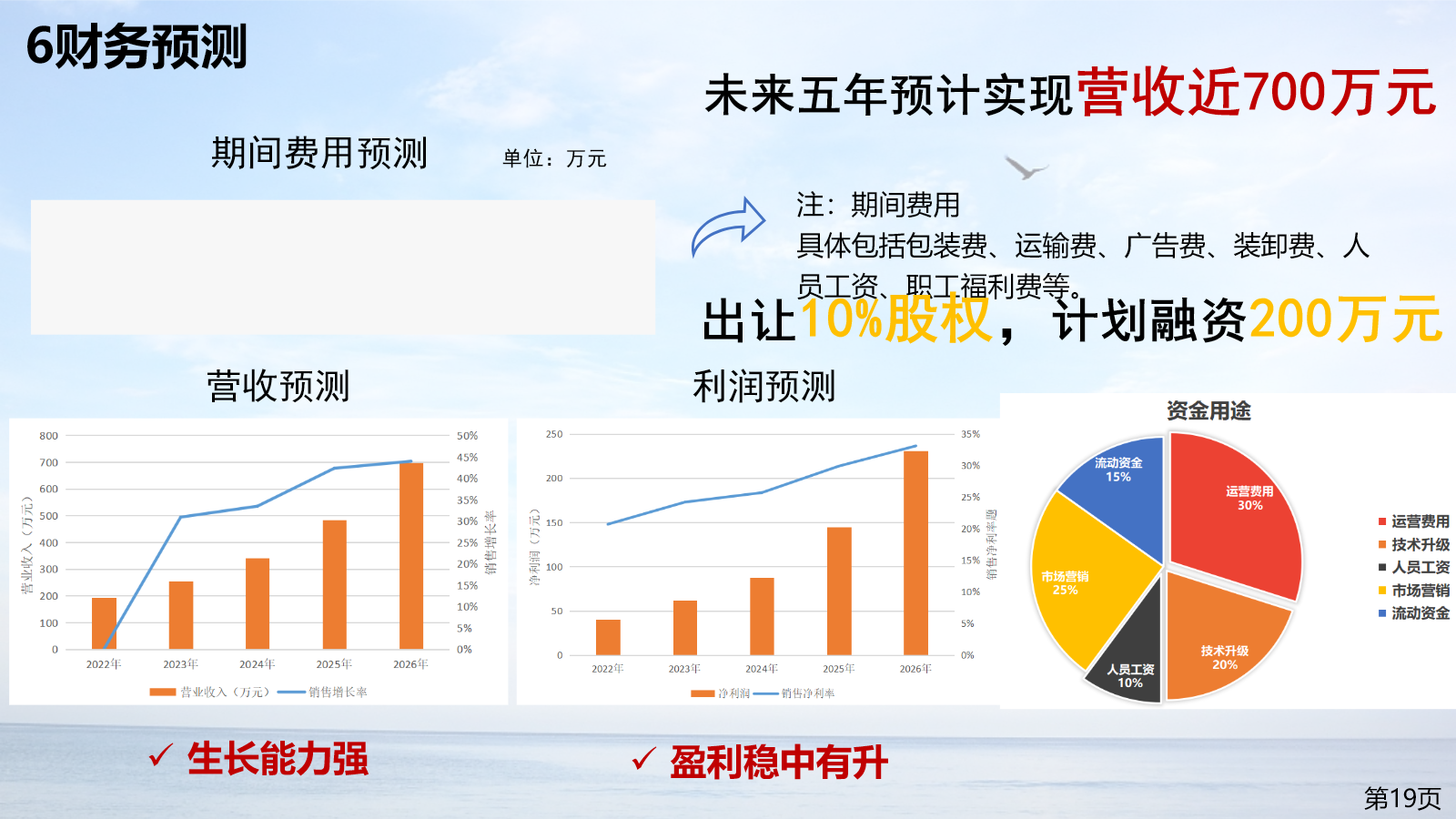
A project-stage financial and financing forecast, not actual operating performance.