Back to Projects

EquipFlow | Manufacturing Equipment Lifecycle Platform

An independent undergraduate capstone from enterprise problem discovery to full-stack implementation
Independent End-to-End Owner | Research, System Design, and Full-Stack Implementation 2024 (exact months to be added) Individual Undergraduate Capstone Completed 2024-06-01
Vue.js Element UI Spring Boot Spring Security MyBatis MySQL Redis
Enterprise Information System Product & System Design Full-Stack Development Undergraduate Capstone
EquipFlow manufacturing equipment lifecycle platform dashboard
Case at a Glance

EquipFlow | Manufacturing Equipment Lifecycle Platform

Background / Problem
The company lacked a unified equipment-management platform and reliable operating-time records, leaving procurement, inspection, maintenance, and repair data fragmented and maintenance planning imprecise.
My Role & Scope
Individual undergraduate capstone; independently owned problem discovery, enterprise research, business and system modeling, platform and database design, and full-stack implementation.
Key Decisions / Actions
  • Mapped procurement, inspection, maintenance, and repair workflows and modeled requirements, static structure, and dynamic behavior with UML
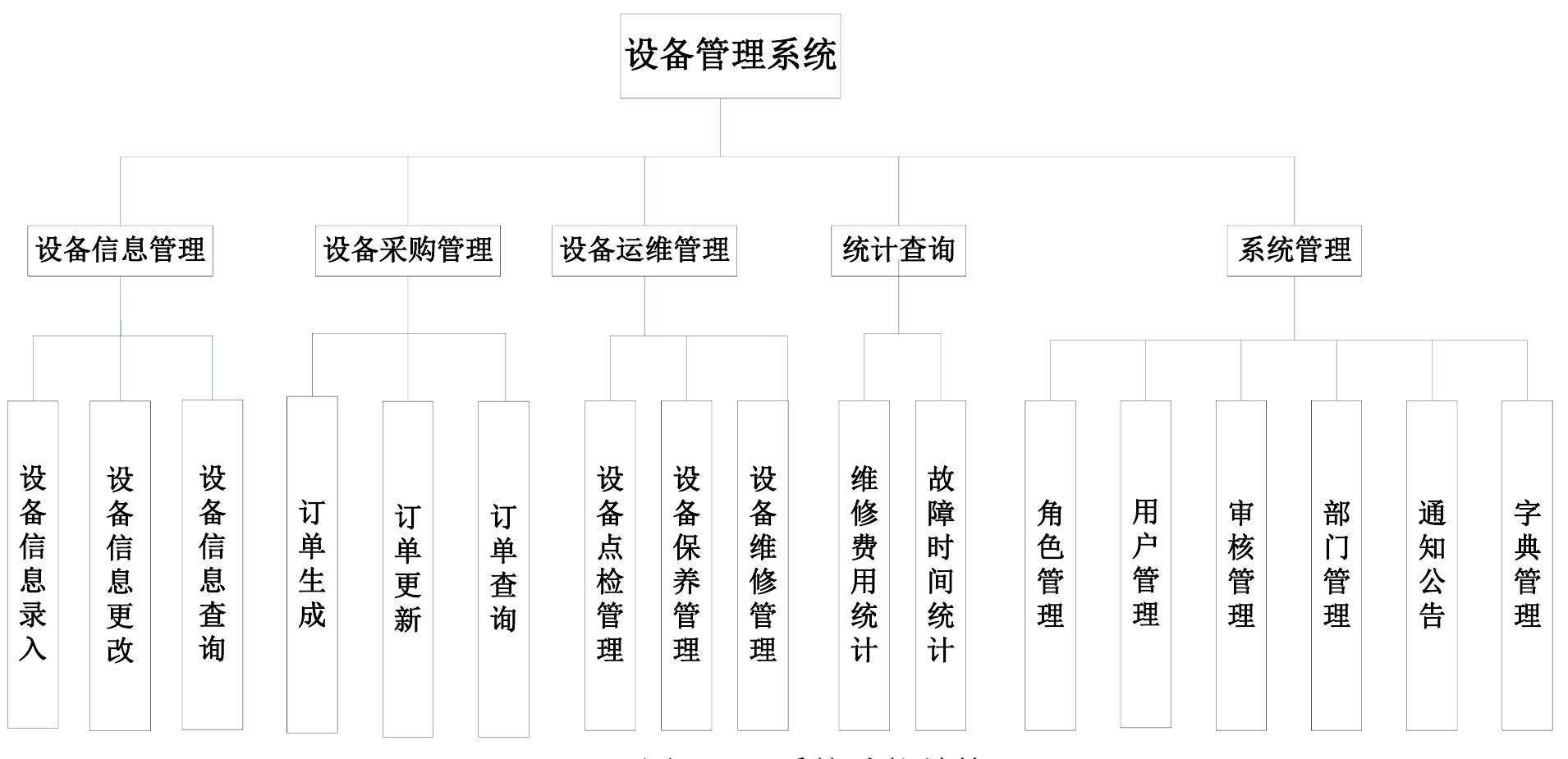
  • Designed five modules covering equipment information, procurement, operations and maintenance, analytics, and system administration, together with their database relationships
  • Adapted an open-source codebase into a Vue + Spring Boot system without AI-assisted coding
Result / Validation Status
Completed a working PC web system and undergraduate thesis covering login, dashboards, equipment, procurement, operations and maintenance, analytics, and administration; enterprise deployment and quantified outcomes are unconfirmed.
Key Outputs
  • Undergraduate thesis Available
  • Working system pages and feature screenshots Available
  • Source code and live demo Pending
  • Enterprise deployment or acceptance results Pending

Project Overview

EquipFlow is the portfolio display name for my undergraduate thesis project, originally titled Analysis and Design of Workshop Equipment Lifecycle Management System. This individual capstone addressed equipment management in a manufacturing enterprise. The company lacked a unified platform, some equipment information remained scattered across isolated systems, and operating time was not measured consistently enough to schedule maintenance precisely. Starting from an enterprise internship and field research, I moved through literature review, requirements analysis, business-process mapping, system modeling, platform and database design, and frontend and backend implementation. I independently delivered the full workflow by adapting and extending open-source code, without AI-assisted coding.

Pain Points & Opportunities

Equipment management is more than a data-entry task. Procurement connects demand, approval, suppliers, contracts, and acceptance, while inspection, maintenance, and repair involve different roles, schedules, equipment states, and historical records. The company also needed to address fragmented master data, insufficient operating-time records, imprecise maintenance reminders, and limited management visibility. The project therefore had to clarify the lifecycle and cross-role relationships before deciding what belonged in the first release, rather than presenting predictive maintenance without the required data foundation.

Goals & Metrics

The capstone focused on the first stage of equipment-management digitization: centralize equipment and procurement data, record inspection, maintenance, and repair work, support maintenance plans and reminders, provide views of usage, faults, maintenance, and costs, and make the system manageable through users, roles, departments, and logs. Performance analysis, a fault knowledge base, predictive maintenance, multi-site cloud services, and integration with other industrial software remained future directions rather than completed scope.

User Research

The research combined an enterprise internship and field investigation with literature review and functional analysis. It first established two core problems - fragmented equipment management and insufficient operating-time statistics - then mapped procurement, inspection, maintenance, and repair across the equipment lifecycle. Non-functional needs included timely responses, security, and ease of use. The literature review provided lifecycle-management and system-design context, while the business analysis defined the first-stage boundary. The thesis does not report interview counts or a quantitative research sample, so this case does not invent them.

Solution Design

UML was used to define role boundaries and equipment-state changes through use cases and descriptions, class models, state diagrams, and sequence diagrams. The platform was divided into five primary modules: equipment information, equipment procurement, equipment operations and maintenance, analytics, and system administration. Database work covered conceptual, logical, and physical design for equipment, procurement, inspection, maintenance, repair, users, roles, departments, and logs. A separated frontend-backend architecture with presentation, service, and persistence layers kept interaction, business rules, and data access distinct.

EquipFlow system function structure

System function structure: equipment information, procurement, operations and maintenance, analytics, and administration.

Execution Plan

Implementation did not recreate every infrastructure component from scratch. I first understood an existing open-source codebase, adjusted its data model, and completed the business-specific extensions. The frontend used Vue.js, Element UI, Axios, JavaScript, and CSS for login, dashboards, forms, lists, and analytics. The backend used Java, Spring Boot, Spring MVC, Spring Security, MyBatis, and Druid for authorization, business rules, error handling, and data access, with MySQL and Redis supporting persistence and caching. Completed in 2024 without generative-AI coding assistance, the product decisions, system design, and implementation were independently owned.
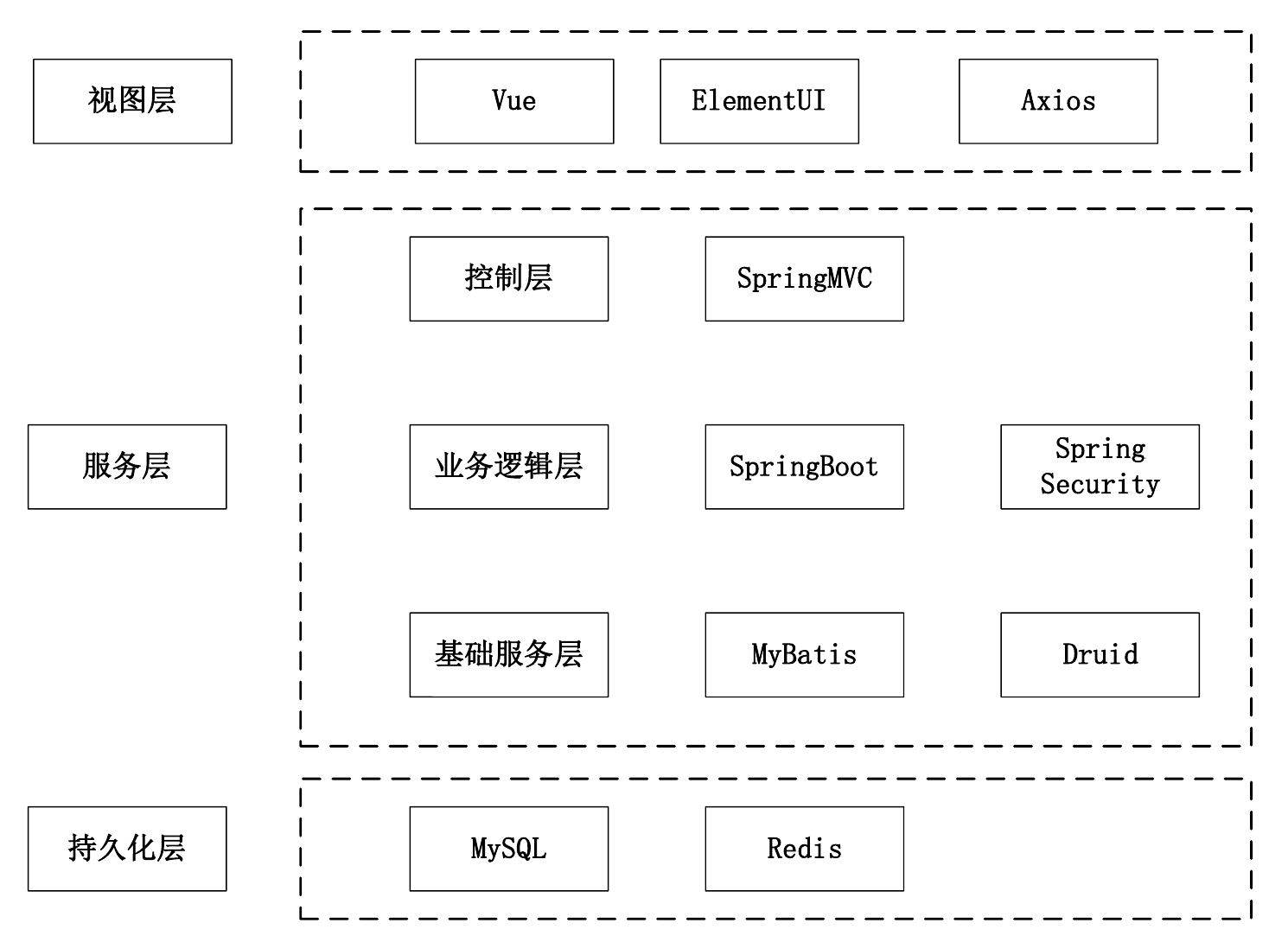
EquipFlow frontend and backend architecture

Frontend and backend architecture: presentation, service, and persistence layers.

Results Review

The capstone produced a working PC web system and an undergraduate thesis. Implemented pages cover user login, an equipment dashboard, equipment information, procurement orders, inspection, maintenance, repair analytics, and administrative functions for users, roles, departments, announcements, dictionaries, and logs. This evidence shows that the work reached functional implementation rather than stopping at a concept or static prototype. The available material does not establish formal enterprise deployment or acceptance, nor quantified changes in failure rate, maintenance cost, or equipment life, so those expected benefits are not presented as achieved outcomes.
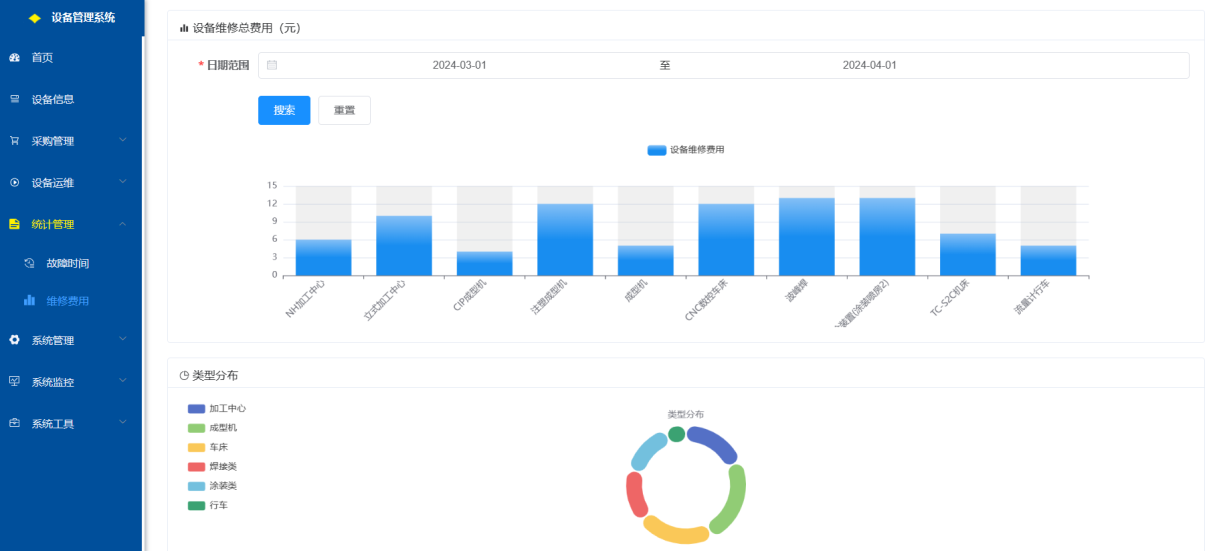
EquipFlow equipment maintenance statistics dashboard

Analytics module: turning equipment maintenance records into a visual management view.

Iteration Reflection

The system established an information foundation, but the data was still used mainly for recording and retrieval. A future version could add performance analysis and predictive maintenance using real production data, integrate with industrial systems such as MES, and offer a mobile or mini-program experience for staff on the shop floor. The engineering package would also benefit from automated tests, deployment documentation, and a reproducible demo, plus a clear record of the underlying open-source project, license, and extension boundaries once disclosure is approved. The project demonstrated that I could independently carry an enterprise information system from a business problem through traditional software engineering and working implementation, rather than delivering only an isolated feature.