Back to Projects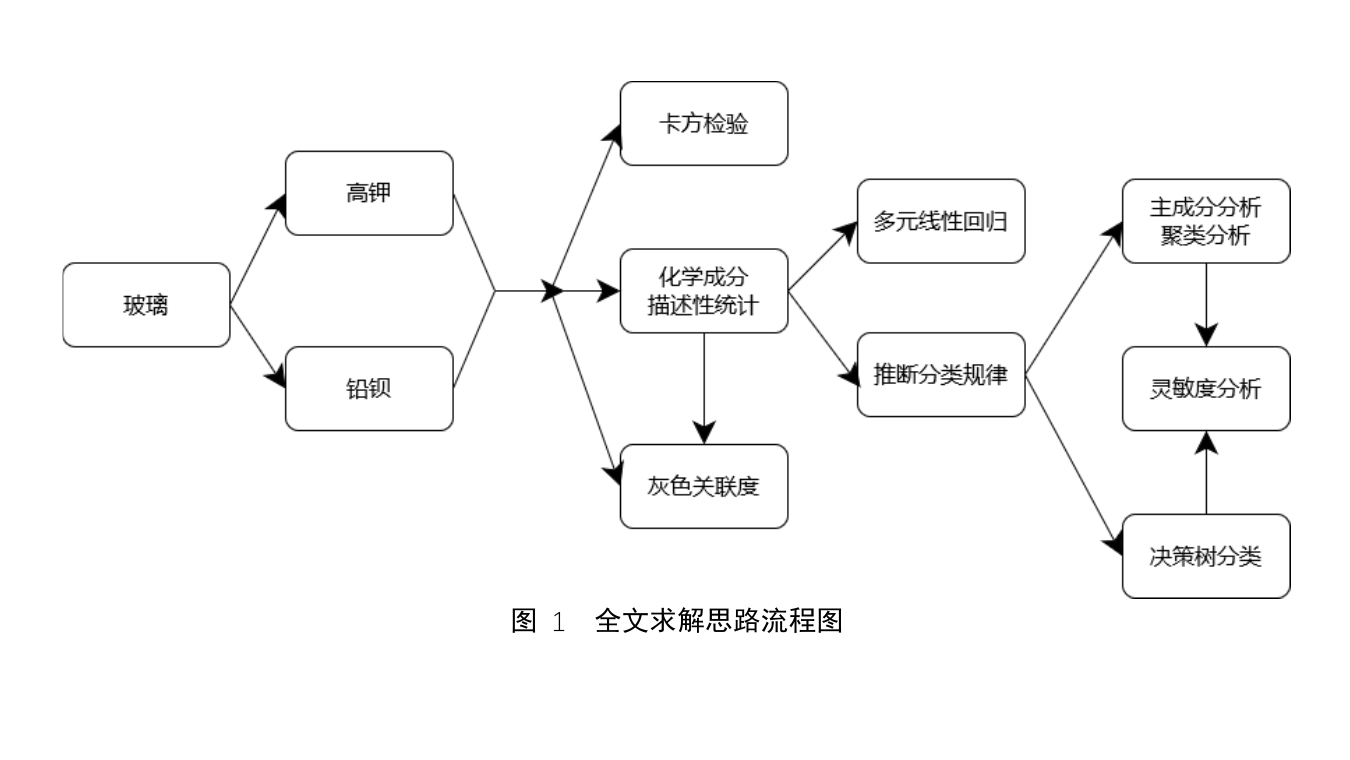
Composition Analysis and Identification of Ancient Glass Artifacts
Mathematical modeling from chemical composition data to glass-type identification
Code Implementation / Supporting Modeling
2022 (exact dates to be added)
To be added
Provincial First Prize
2022-09-18
R
SPSS
Random Forest
Naive Bayes
Multivariate Regression
Sensitivity Analysis
Mathematical Modeling
Data Analysis
Classification
Cultural Heritage
Case at a Glance
Composition Analysis and Identification of Ancient Glass Artifacts
- Background / Problem
- How can surface characteristics and chemical composition data reveal weathering patterns, support glass subtype discovery, and identify unknown ancient glass samples?
- My Role & Scope
- Primarily responsible for code implementation and contributed to selected modeling tasks, including random forest, Bayes, multivariate regression, and sensitivity analysis.
- Key Decisions / Actions
- Used R and SPSS for data processing and model code, focusing on random forest, Bayes, multivariate regression, and sensitivity analysis
- Supported model selection and debugging while connecting statistical tests, regression, clustering, and classification with the team
- Compared classifiers and perturbed chemical components to test the stability of unknown-sample identification
- Result / Validation Status
- The team produced a 37-page submission and won a Provincial First Prize.
- Key Outputs
- Mathematical modeling competition paper Available
- Model code implementation Available
- Provincial First Prize Available
Project Overview
This project addressed Problem C, “Composition Analysis and Identification of Ancient Glass Artifacts,” in the 2022 China Undergraduate Mathematical Contest in Modeling sponsored by Higher Education Press. Surface weathering can develop during burial and preservation, while glass type, visible characteristics, and chemical composition interact in complex ways. Starting from the supplied artifact dataset, the team analyzed weathering and composition changes, derived subtypes for high-potassium and lead-barium glass, and identified unknown samples. The project won a Provincial First Prize.
Pain Points & Opportunities
The analysis faced three challenges. First, some samples had component totals outside the valid range and some records contained missing values, so data eligibility had to be established before modeling. Second, weathering status, glass type, decoration, color, and multiple chemical components all interacted, making a single statistic insufficient. Third, identifying unknown samples required not only a prediction but also comparison across classifiers and stability checks under composition perturbations.
Goals & Metrics
The project addressed five tasks: test how surface weathering relates to glass type, decoration, and color; analyze chemical composition changes before and after weathering; develop interpretable subtypes for high-potassium and lead-barium glass; classify unknown samples and test result stability; and explain relationships among chemical components. The team had to complete data cleaning, model comparison, stability testing, and paper delivery within the competition timeline.
User Research
The modeling process began with a validity review of the supplied data. The paper treated records whose component totals fell outside 85% to 105% as anomalous and handled them together with missing-data checks. Descriptive review across weathering status, type, decoration, color, and chemical composition then established variable relationships and the order of later statistical and classification work. This section describes dataset investigation rather than separate user interviews or field research.
Solution Design
The solution used a layered model pipeline. The team first applied a chi-square test to examine whether surface weathering was associated with glass type, decoration, or color, followed by descriptive statistics and multivariate linear regression for composition changes. PCA reduced the chemical feature space before hierarchical clustering and K-means were compared. Decision trees and naive Bayes formed the main classification path presented in the paper, while my code experiments also included random forest. Sensitivity analysis perturbed key components, and grey relational analysis interpreted relationships among chemical components.
Execution Plan
The paper first removed samples with invalid component totals and missing data, then built separate analyses for weathering relationships, composition changes, subtype discovery, and unknown-sample identification. My contribution focused on implementation and selected modeling tasks: I used R and SPSS for data processing and model validation, with primary responsibility for random forest, Bayes, multivariate regression, and sensitivity analysis code. The team compared clustering methods, cross-checked decision-tree and Bayes outputs, and varied key component ratios to observe whether predictions changed.
Results Review
The paper reported a strong association between surface weathering and glass type, but no similarly clear association with color or decoration. High-potassium and lead-barium glass showed different composition shifts after weathering. PCA with two clustering approaches produced subtype schemes for both glass families, while decision trees and Bayes gave broadly consistent classifications for the unknown samples. Sensitivity analysis tested classification stability, and grey relational analysis added an explanation of component relationships. The team completed a 37-page submission and won a Provincial First Prize.
Iteration Reflection
Comparing multiple models improved the interpretability of the classification process, but the conclusions remain sensitive to sample size, anomaly rules, and measurement error in chemical composition. The project also reinforced that implementation is not merely translating equations into code: assumptions, outputs, and written conclusions must remain aligned throughout the workflow. Future work could add cross-validation, class-imbalance evaluation, clearer error analysis, and a more complete reproducible pipeline for preprocessing, model selection, and parameter sensitivity.
Modeling Process and Key Figures
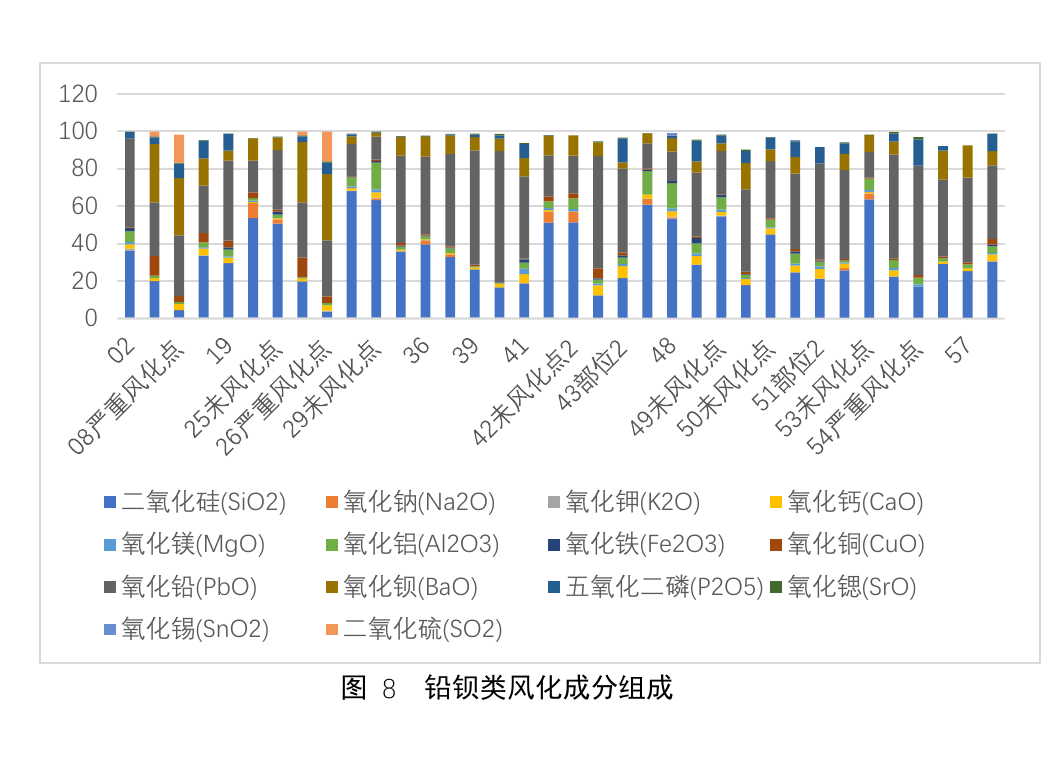
Paper Figure 8: Weathered composition profiles for lead-barium glass, leading into pre-weathering composition prediction and multivariate regression. Original chart labels are in Chinese.
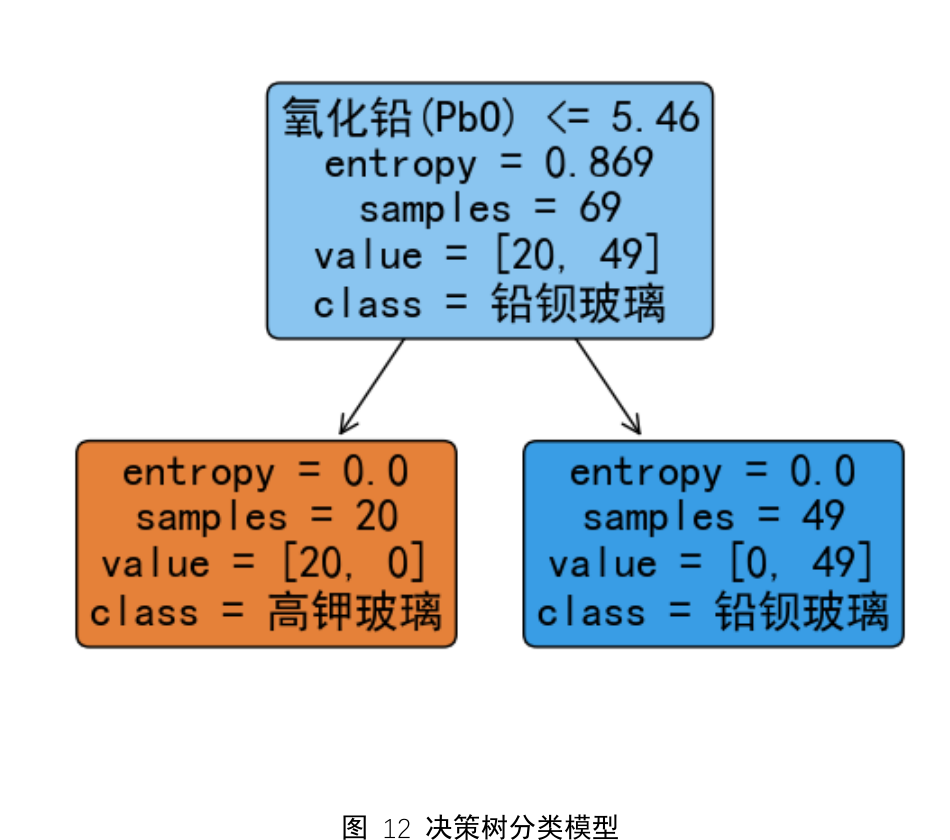
Paper Figure 12: A decision tree using lead oxide content as the key split for high-potassium and lead-barium glass. Original labels are in Chinese.
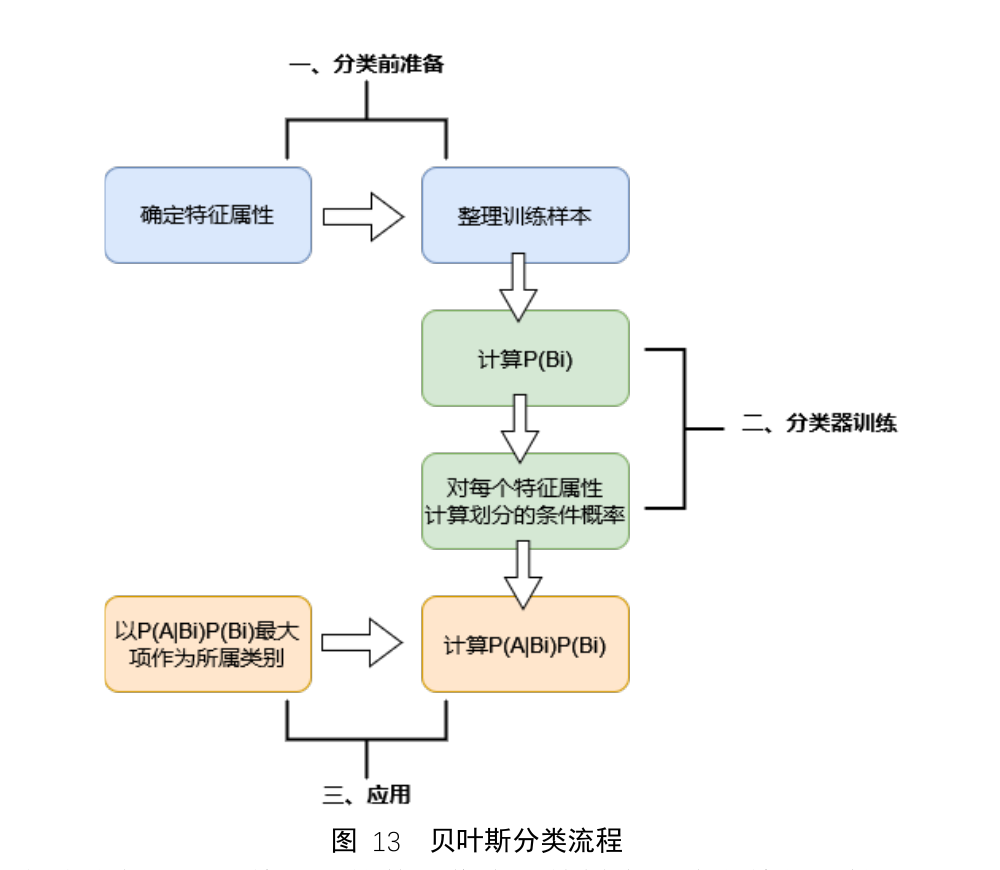
Paper Figure 13: The Bayes workflow from sample preparation and conditional-probability estimation to final class assignment. Original labels are in Chinese.