Projects
Selected work across AI products, enterprise systems, user research, and data modeling. Internship-related cases only present methods and experience suitable for public sharing.
Core AI Projects
Smart Choice Agent | Structured, Explainable Decisions
Turning vague intent into ranked options, constraint analysis, evidence records, and auditable traces
A Python multi-agent decision system that connects intent understanding, clarification, candidate generation, risk review, and explanation agents with a deterministic ranking engine for stable, testable recommendations.
- ▸ A multi-agent workflow for intent, understanding, clarification, candidates, planning, review, explanation, risk, and evaluation
- ▸ A deterministic ranking engine with hard-constraint filtering and seven-dimensional scoring
- ▸ FastAPI plus a local web UI, with rule agents that work without an API key
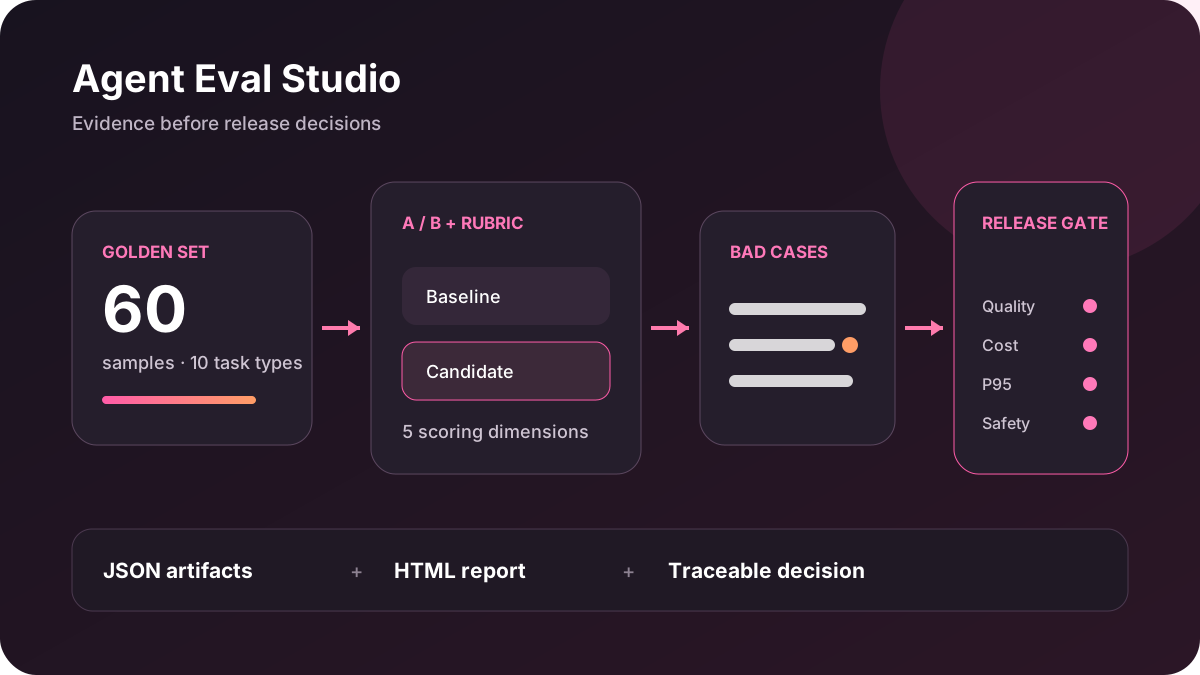
Agent Eval Studio | Release-Oriented Agent Evaluation
A runnable loop from Golden Set and A/B comparison to bad cases and release gates
Built an evidence-first Agent evaluation workbench with 60 samples across 10 task types, a five-dimensional rubric, A/B comparison, bad-case analysis, and quality, cost, P95 latency, and safety gates.
- ▸ A 60-sample Golden Set spanning 10 task types instead of a few curated demos
- ▸ A five-dimensional rubric, A/B comparison, and bad-case analysis for explainable choices
- ▸ Quality, cost, P95 latency, and safety gates with JSON artifacts and an HTML report
Insight AI
Helping people judge health information—not just receive answers
A health-information product with quick checks, guided practice, and progress review, helping users understand evidence, practice judgment, and build their own reasoning habits.
- ▸ Designed three product modes: Quick Check, Guided Practice, and Progress Review
- ▸ Built a personalized loop around scenario judgment, instant feedback, and transfer practice
- ▸ Used RAG for traceable evidence and defined a three-group product validation plan
AI Coding–Driven Agent Configuration Platform
End-to-end delivery from product specification to implementation
Used structured specifications to organize requirements and interaction design, then worked with coding agents across frontend and backend implementation, integration testing, and launch coordination.
- ▸ Covered requirement scoping, interaction design, and structured specifications
- ▸ Contributed to JavaScript frontend and Go backend implementation
- ▸ Worked with engineering and QA through integration, fixes, and launch
Betty Xu Portfolio | An AI-Coding-Driven, Continuously Evolving Site
A bilingual, verifiable portfolio continuously delivered from positioning and project evidence
Turned personal positioning, project evidence, and content-maintenance needs into an evolving bilingual site, using Research → Plan → Implement, build checks, and deployment as an AI Coding loop.
- ▸ Designed a bilingual portfolio architecture around positioning, project evidence, and reading paths
- ▸ Used Research → Plan → Implement to constrain AI Coding across content, interaction, templates, and deployment
- ▸ Validated delivery through Hugo builds, release checks, Vercel, and GitHub Pages workflows

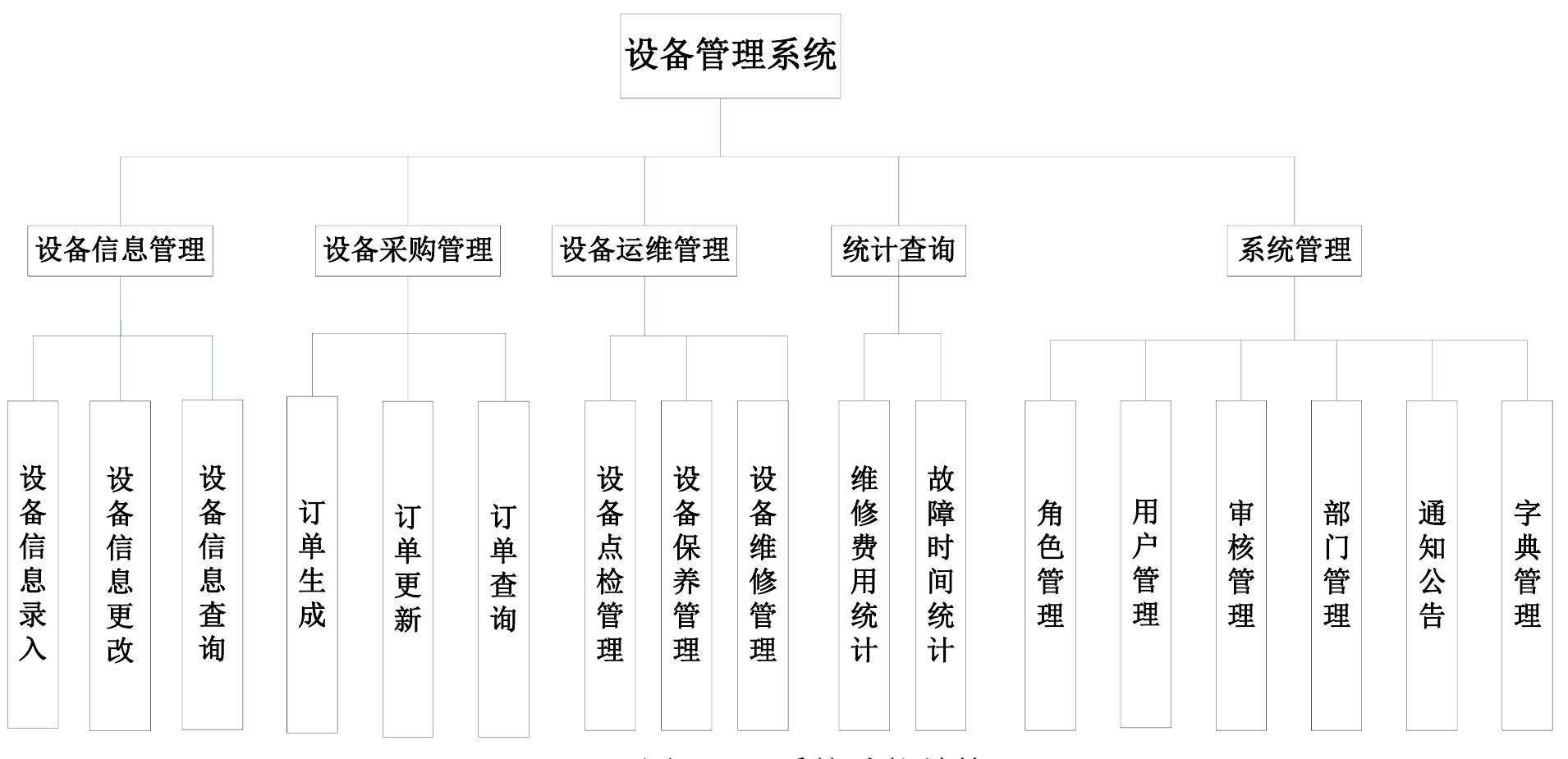
Product & System Development
Product & User Research
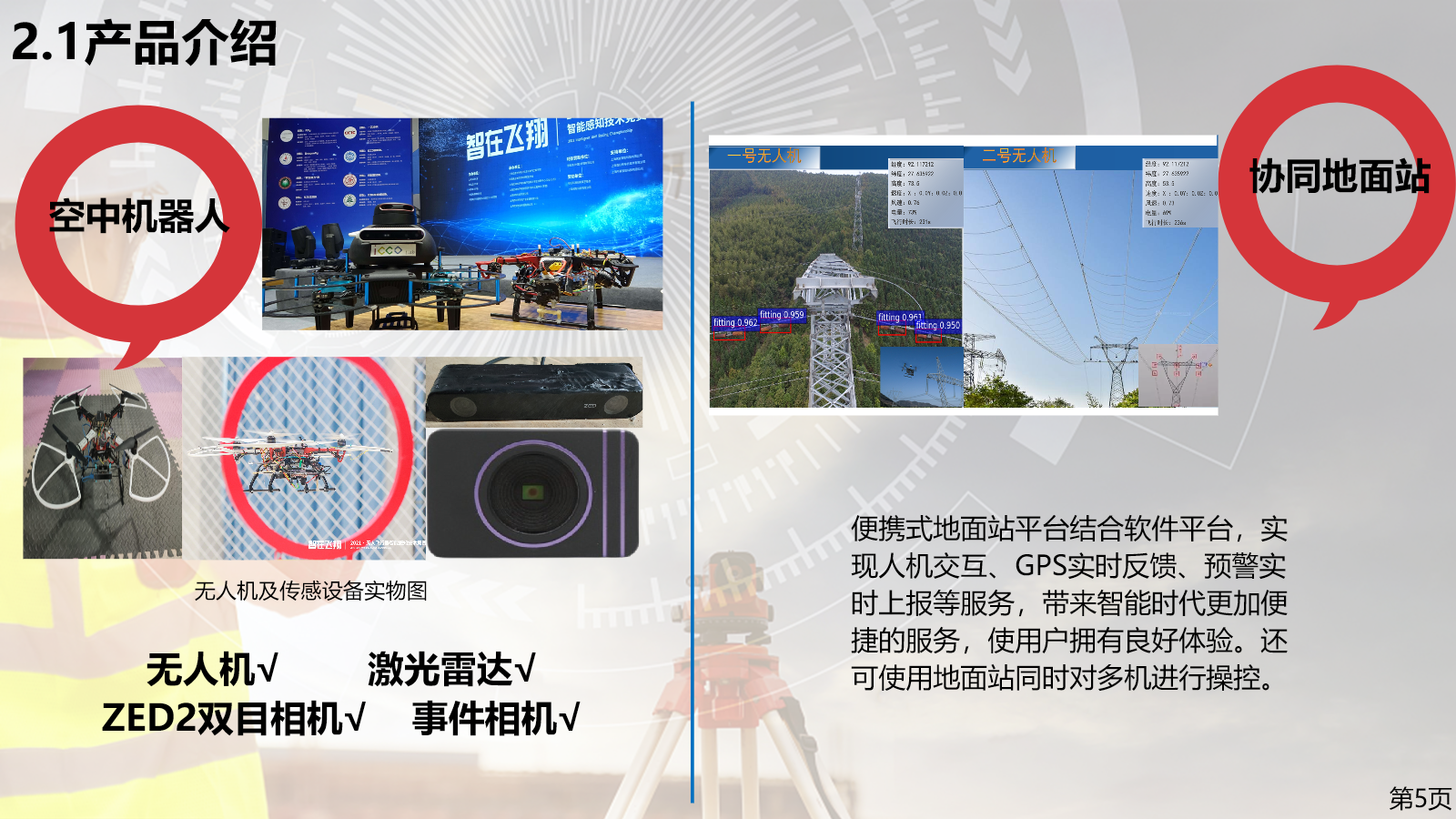
Lingfeng Smart Delivery | Air-Ground Collaborative Robot
An air-ground delivery concept for the last mile in campuses and residential communities
Owned competitive analysis, business-model design, and financial forecasting for an air-ground delivery concept, connecting differentiation to revenue paths and funding assumptions.
- ▸ Compared competitors across precision, operating range, automation, digital capabilities, and price
- ▸ Designed a business model linking R&D, production, platform services, and downstream applications
- ▸ Built five-year revenue, profit, expense, financing, and fund-allocation forecasts
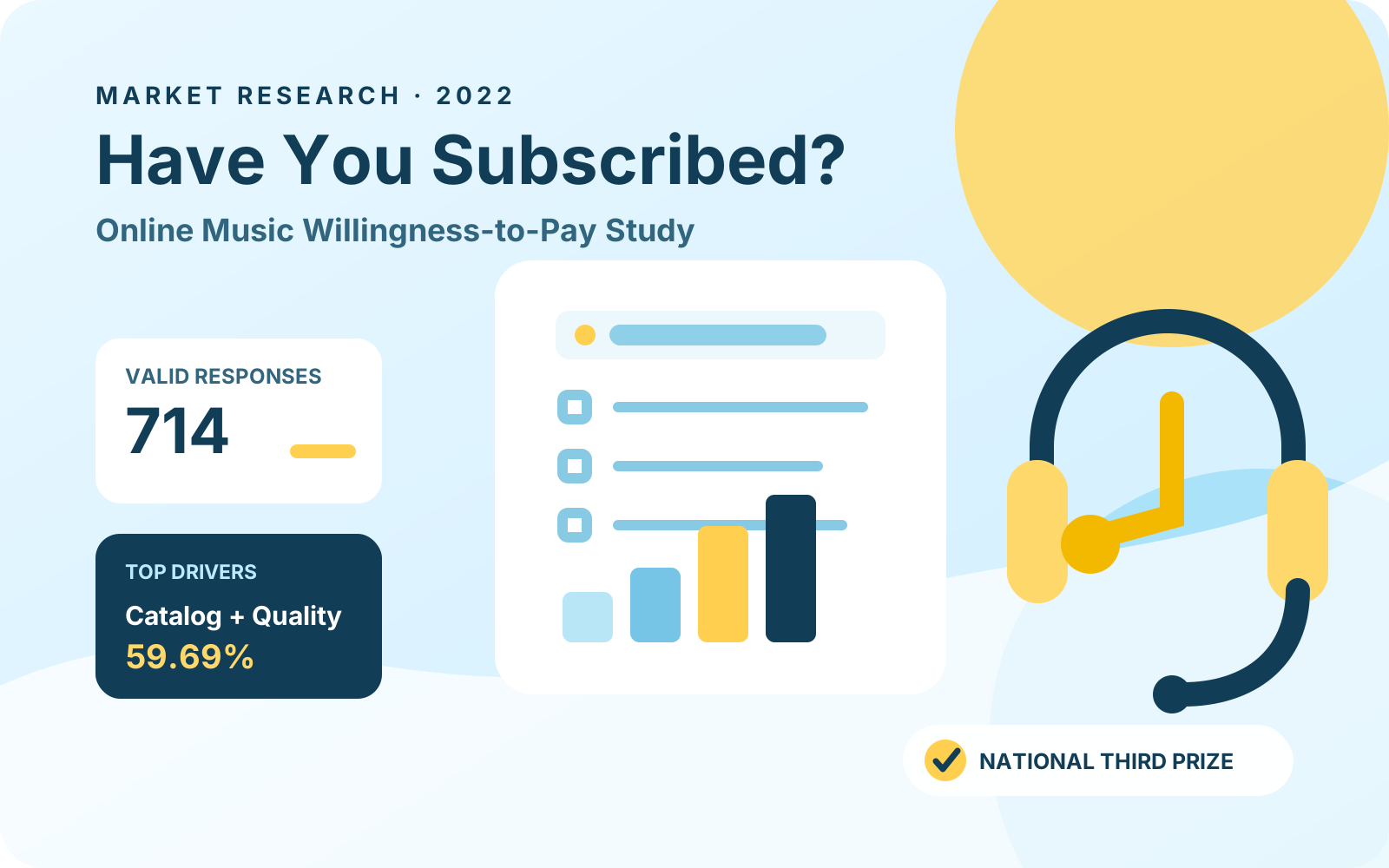
“Have You Subscribed?” | Online Music Willingness-to-Pay Study
From survey research to online music payment drivers
Studied online music payment through user behavior and consumer psychology, validated the survey instrument, and used a random forest to turn payment drivers into platform recommendations.
- ▸ Proposed the selected user-centered topic and led questionnaire design, pilot testing, and the formal survey
- ▸ Ranked seven payment drivers with a random forest; catalog and sound quality contributed about 59.69% of total importance
- ▸ Wrote the related conclusions and recommendations; the project received a national third prize
AI Coding Mini Demos
Eat-What
An AI-coded decision helper born from my own choice paralysis
A lightweight food-and-drink picker that narrows options by occasion and flavor, supports temporary exclusions, and uses rating-weighted randomness to turn repeated comparison into an acceptable decision.
- ▸ Turned my recurring what-to-eat and what-to-drink indecision into a minimal decision loop
- ▸ Narrows candidates by occasion, flavor, and temporary exclusions before a rating-weighted draw
- ▸ Supports custom pools, categories, and the latest 20 results, with preferences stored locally

HourRead
Short-read recommendations for the one or two hours you actually have
A lightweight reading concept that matches short books to the time, mood, and context of a commute, lunch break, or evening wind-down.
- ▸ Uses available reading time and current state as recommendation inputs
- ▸ Defines complementary ReadNow and CanonLit scores
- ▸ Reduces search effort through curated lists and standardized book cards
Data Modeling & Analysis
Composition Analysis and Identification of Ancient Glass Artifacts
Mathematical modeling from chemical composition data to glass-type identification
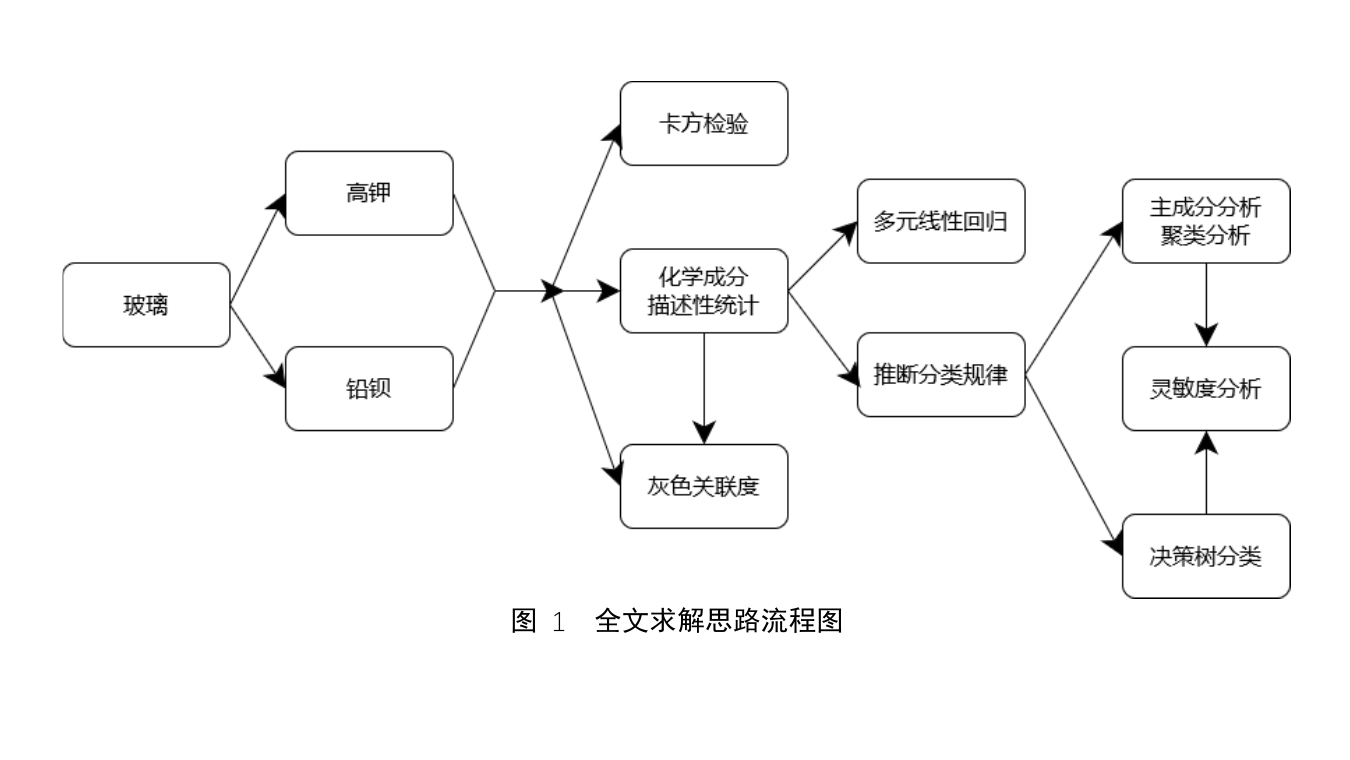
A Provincial First Prize project for Problem C of the 2022 CUMCM, analyzing weathering, composition changes, and type identification for ancient glass artifacts through statistical modeling and classification.
- ▸ Led code implementation for random forest, Bayes, multivariate regression, and sensitivity analysis while supporting model development
- ▸ The team combined statistical tests, regression, clustering, and classification to analyze ancient glass and unknown samples
- ▸ Won a Provincial First Prize in Problem C of the 2022 CUMCM
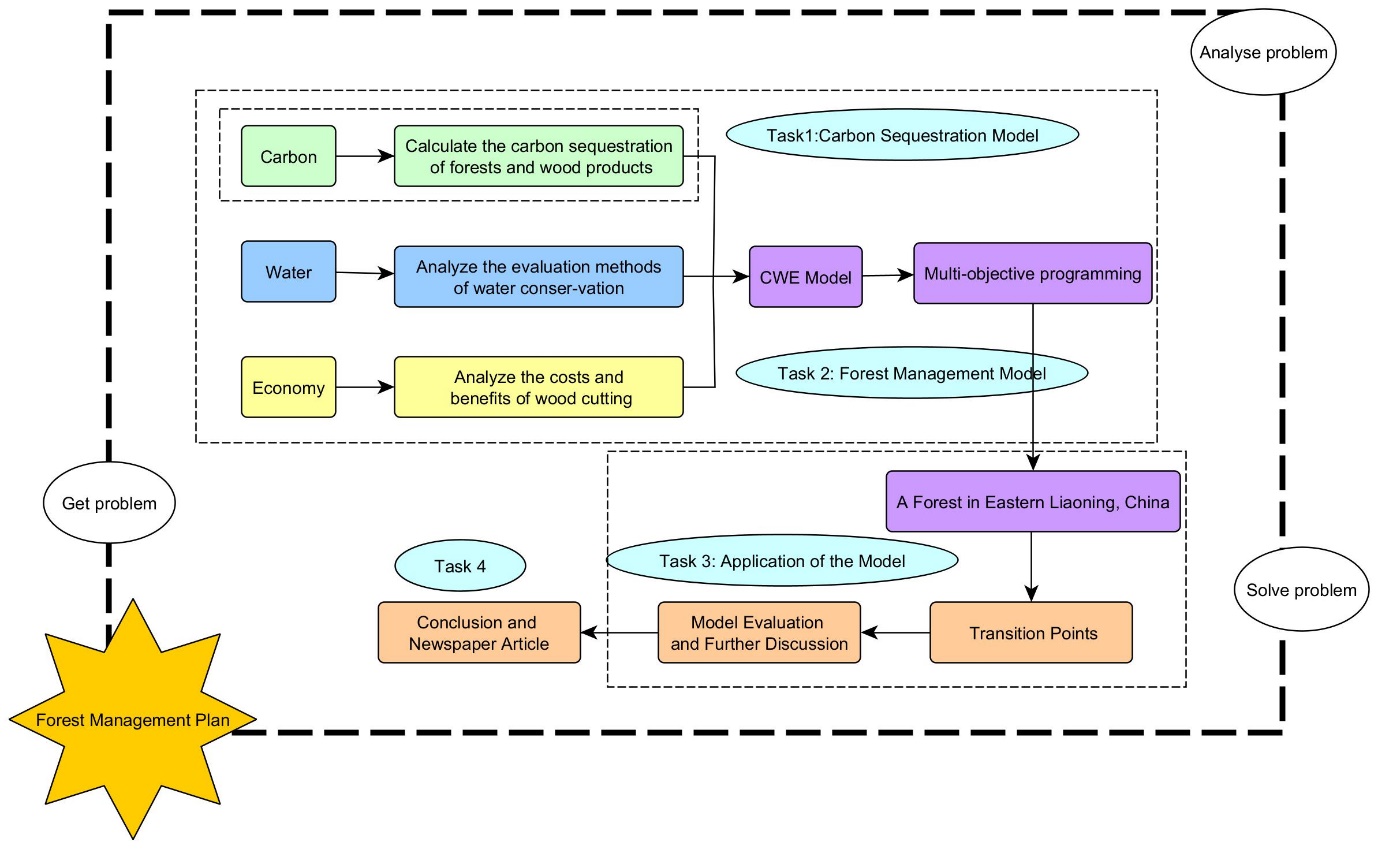
MCM Forest Management | Multi-Objective Modeling of Carbon, Economy, and Water Conservation
2022 MCM/ICM Problem E: using a CWE model to balance harvesting and ecological value
Built layered models for forest carbon sequestration, harvesting economics, and water conservation, then applied a multi-objective management plan to larch and Mongolian oak forests in eastern Liaoning.
- ▸ Primarily responsible for project modeling, with a limited contribution to paper writing; the team received an Honorable Mention
- ▸ Separated carbon sequestration by living trees and wood products and used a Richards growth curve for long-term estimation
- ▸ Applied AHP to five water-conservation factors while accounting for harvesting revenue and long-term management costs